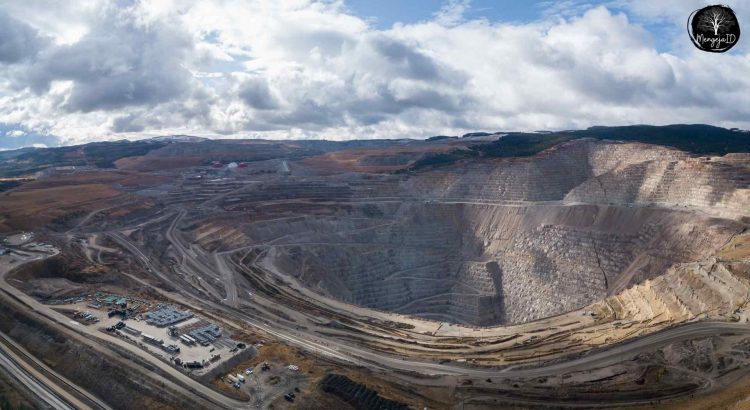
Indonesian coal barons have won almost all the interests they have fought for over the last four years. The central government has regained complete control over mineral resources, with local governments wholly stripped of their authority in mining licensing.
These are some essential revisions to Mineral and Coal (Minerba), aka the Minerba Law, approved by the House of Representatives in the Plenary Meeting held Tuesday (12/5/2020) to be implemented immediately.
I reject the return of mineral licensing authority to the central government. However, many corruption cases involving local leaders related to mining concessions and past issues show that many regional heads are trying to extort their licensing authority, mainly to collect election campaign funds.
However, we must also look at the reasons for reform and the emergence of decentralization, how centralized control creates national wealth, and how regional wealth has been exploited to benefit a few political elites.
The biggest beneficiaries are, of course, companies that hold the first six or seven generations of coal mining contracts that expire in the next three years. These companies are also the most aggressive in lobbying the government and the DPR on revising the Mining Law.
The revised law frees them from a provision in the 2009 Mining Law that requires them to return this concession to the government upon expiry of the contract. They are also guaranteed two 10-year contract extensions and can maintain their privileges, ranging from 30,000 hectares to more than 120,000 ha; The 2009 Mining Law limits new concessions to 15,000 ha.
The government considers the revision urgent, despite COVID-19 and the accompanying public health, social and economic crisis. The main argument and rationale are that mining is long-term. First, generation coal contract holders need legal certainty over their concession at least two years before the contract expires so that they have sufficient time to prepare an investment plan.
In addition, most of these contract holders are coal giants, which account for nearly 40 percent of the national output of 600 million tons per year and supply 70 percent of PLN’s electricity needs for coal. Due to legal uncertainty, disruption of production in their concessions will also impair state revenues in mining taxes and royalties and potentially lead to mass layoffs.
I believe civil society organizations and environmental NGOs will oppose the revision through a judicial review petition with the Constitutional Court, particularly regarding guaranteed contract extensions and concession sizes. But a judicial review will not invalidate the law in its entirety, only the revised provisions.
I think the revised law makes a carte blanche for big coal mining companies because the law does stipulate safeguards to protect mining companies.
Administrative, financial, technical, and environmental terms and conditions that are not too stringent still apply to granting a 20-year coal mining permit, guaranteed contract extension, and concession size. However, the technical details of the rules for law enforcement will still be refined in presidential regulations and ministerial instructions.
The government should focus on handling the Covid-19 pandemic not by stealing the start in ratifying the Minerba Law and solving most of the problems that have been of public concern so far (Reclamation, Non-CnC IUP, Mining Hole Victims, and Environmental Pollution) so that natural resource management will be correct. Genuinely serve the interests of the people and are socially and environmentally sustainable.